
T 细胞中的线粒体功能障碍:以炎症性肠病为例。
Mitochondrial dysfunctions in T cells: focus on inflammatory bowel disease.
机构信息
Research Institute of Aging and Metabolism, Kyungpook National University, Daegu, Republic of Korea.
Department of Internal Medicine, School of Medicine, Kyungpook National University, Kyungpook National University Chilgok Hospital, Daegu, Republic of Korea.
出版信息
Front Immunol. 2023 Sep 22;14:1219422. doi: 10.3389/fimmu.2023.1219422. eCollection 2023.
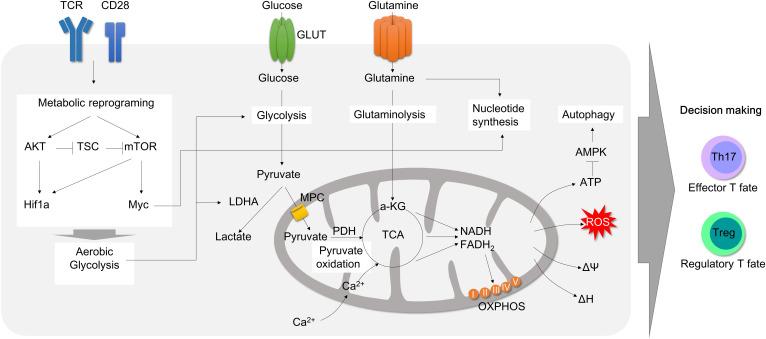
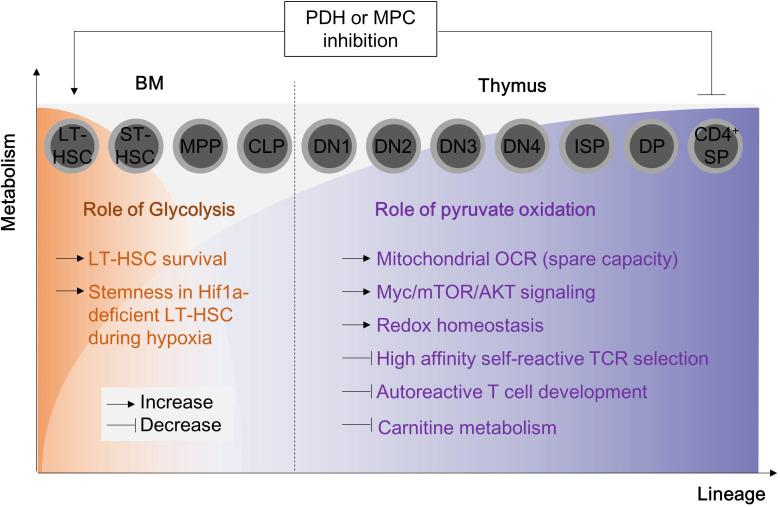
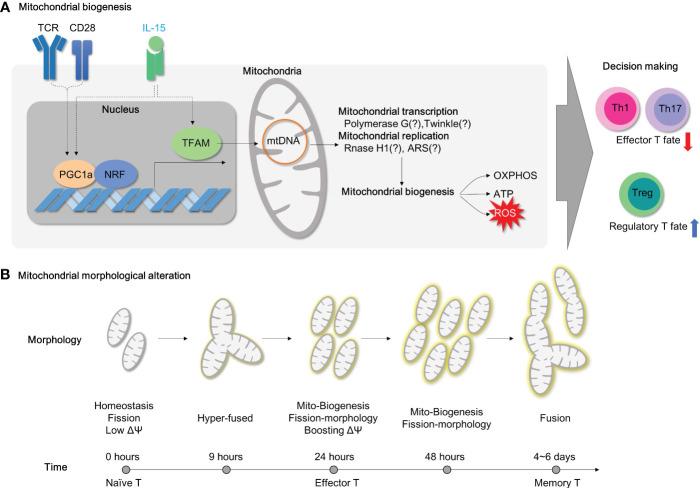
Mitochondria has emerged as a critical ruler of metabolic reprogramming in immune responses and inflammation. In the context of colitogenic T cells and IBD, there has been increasing research interest in the metabolic pathways of glycolysis, pyruvate oxidation, and glutaminolysis. These pathways have been shown to play a crucial role in the metabolic reprogramming of colitogenic T cells, leading to increased inflammatory cytokine production and tissue damage. In addition to metabolic reprogramming, mitochondrial dysfunction has also been implicated in the pathogenesis of IBD. Studies have shown that colitogenic T cells exhibit impaired mitochondrial respiration, elevated levels of mROS, alterations in calcium homeostasis, impaired mitochondrial biogenesis, and aberrant mitochondria-associated membrane formation. Here, we discuss our current knowledge of the metabolic reprogramming and mitochondrial dysfunctions in colitogenic T cells, as well as the potential therapeutic applications for treating IBD with evidence from animal experiments.
线粒体已成为免疫反应和炎症中代谢重编程的关键调节者。在致结肠炎 T 细胞和 IBD 的背景下,人们对糖酵解、丙酮酸氧化和谷氨酰胺分解代谢途径的代谢途径越来越感兴趣。这些途径在致结肠炎 T 细胞的代谢重编程中发挥着关键作用,导致炎症细胞因子产生增加和组织损伤。除了代谢重编程,线粒体功能障碍也与 IBD 的发病机制有关。研究表明,致结肠炎 T 细胞表现出线粒体呼吸受损、mROS 水平升高、钙稳态改变、线粒体生物发生受损以及异常的线粒体相关膜形成。在这里,我们讨论了我们目前对致结肠炎 T 细胞代谢重编程和线粒体功能障碍的了解,以及从动物实验中获得的用证据治疗 IBD 的潜在治疗应用。




 Zotero 插件