
免疫检查点抑制剂在血液系统恶性肿瘤中的研究进展及临床应用
Advances and clinical applications of immune checkpoint inhibitors in hematological malignancies.
机构信息
Department of Hematology, Shandong Provincial Hospital, Shandong University, Jinan, Shandong, P. R. China.
Department of Hematology, Shandong Provincial Hospital Affiliated to Shandong First Medical University, Jinan, Shandong, P. R. China.
出版信息
Cancer Commun (Lond). 2024 Sep;44(9):1071-1097. doi: 10.1002/cac2.12587. Epub 2024 Jul 28.
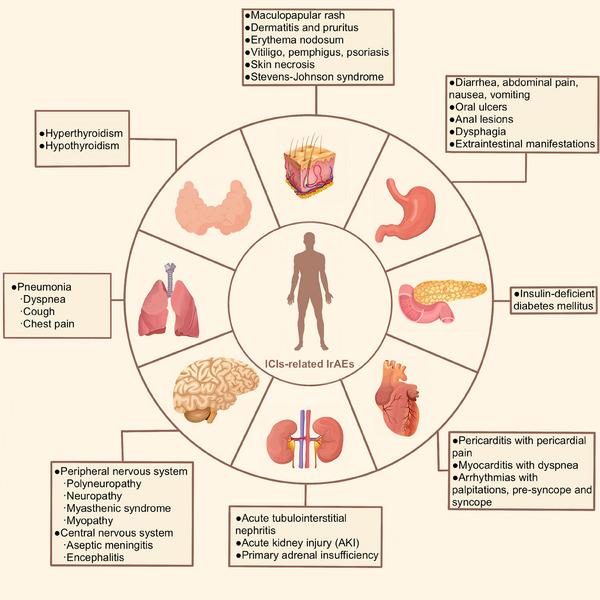
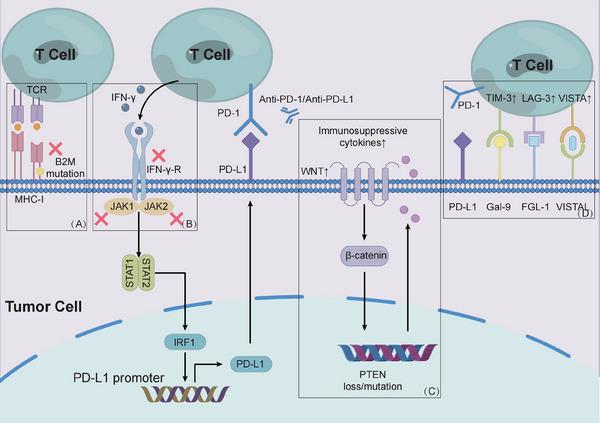
Immune checkpoints are differentially expressed on various immune cells to regulate immune responses in tumor microenvironment. Tumor cells can activate the immune checkpoint pathway to establish an immunosuppressive tumor microenvironment and inhibit the anti-tumor immune response, which may lead to tumor progression by evading immune surveillance. Interrupting co-inhibitory signaling pathways with immune checkpoint inhibitors (ICIs) could reinvigorate the anti-tumor immune response and promote immune-mediated eradication of tumor cells. As a milestone in tumor treatment, ICIs have been firstly used in solid tumors and subsequently expanded to hematological malignancies, which are in their infancy. Currently, immune checkpoints have been investigated as promising biomarkers and therapeutic targets in hematological malignancies, and novel immune checkpoints, such as signal regulatory protein α (SIRPα) and tumor necrosis factor-alpha-inducible protein 8-like 2 (TIPE2), are constantly being discovered. Numerous ICIs have received clinical approval for clinical application in the treatment of hematological malignancies, especially when used in combination with other strategies, including oncolytic viruses (OVs), neoantigen vaccines, bispecific antibodies (bsAb), bio-nanomaterials, tumor vaccines, and cytokine-induced killer (CIK) cells. Moreover, the proportion of individuals with hematological malignancies benefiting from ICIs remains lower than expected due to multiple mechanisms of drug resistance and immune-related adverse events (irAEs). Close monitoring and appropriate intervention are needed to mitigate irAEs while using ICIs. This review provided a comprehensive overview of immune checkpoints on different immune cells, the latest advances of ICIs and highlighted the clinical applications of immune checkpoints in hematological malignancies, including biomarkers, targets, combination of ICIs with other therapies, mechanisms of resistance to ICIs, and irAEs, which can provide novel insight into the future exploration of ICIs in tumor treatment.
免疫检查点在各种免疫细胞上的表达不同,以调节肿瘤微环境中的免疫反应。肿瘤细胞可以激活免疫检查点途径,建立免疫抑制性肿瘤微环境,抑制抗肿瘤免疫反应,从而通过逃避免疫监视导致肿瘤进展。用免疫检查点抑制剂(ICIs)阻断共抑制信号通路可以重新激活抗肿瘤免疫反应,并促进免疫介导的肿瘤细胞消除。作为肿瘤治疗的一个里程碑,ICIs 首先用于实体瘤,随后扩展到血液恶性肿瘤,这仍处于初期阶段。目前,免疫检查点已被作为血液恶性肿瘤有前途的生物标志物和治疗靶点进行研究,并且不断发现新的免疫检查点,如信号调节蛋白 α(SIRPα)和肿瘤坏死因子-α诱导蛋白 8 样蛋白 2(TIPE2)。许多 ICIs 已获得临床批准,可用于血液恶性肿瘤的临床应用,特别是与其他策略联合使用时,包括溶瘤病毒(OVs)、新抗原疫苗、双特异性抗体(bsAb)、生物纳米材料、肿瘤疫苗和细胞因子诱导的杀伤(CIK)细胞。此外,由于药物耐药和免疫相关不良事件(irAEs)的多种机制,受益于 ICIs 的血液恶性肿瘤患者的比例仍低于预期。在使用 ICIs 时需要密切监测和适当干预以减轻 irAEs。本综述全面概述了不同免疫细胞上的免疫检查点、ICIs 的最新进展,并强调了免疫检查点在血液恶性肿瘤中的临床应用,包括生物标志物、靶点、ICIs 与其他疗法的联合应用、ICIs 耐药机制和 irAEs,为未来肿瘤治疗中 ICIs 的探索提供了新的思路。

 Zotero 插件