
定量编码设计的水溶性Fc融合细胞因子受体与其各自的配体结合。
QTY Code-designed Water-soluble Fc-fusion Cytokine Receptors Bind to their Respective Ligands.
作者信息
Hao Shilei, Jin David, Zhang Shuguang, Qing Rui
机构信息
Media Lab, Massachusetts Institute of Technology, 77 Massachusetts Avenue, Cambridge, MA 02139, USA.
Avalon GloboCare Corp., Freehold, New Jersey, USA.
出版信息
QRB Discov. 2020 Apr 9;1:e4. doi: 10.1017/qrd.2020.4.
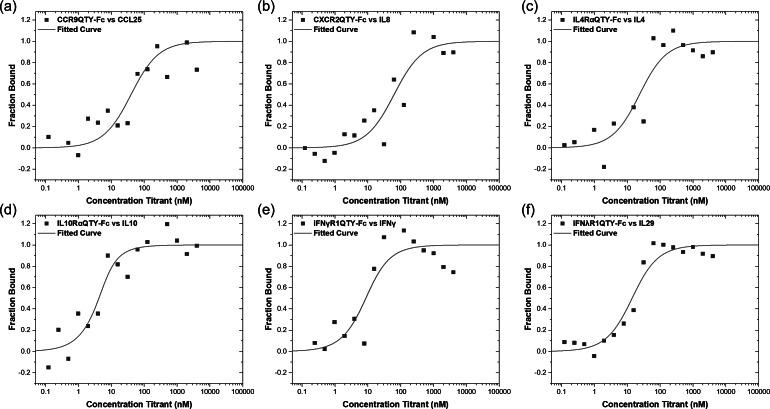
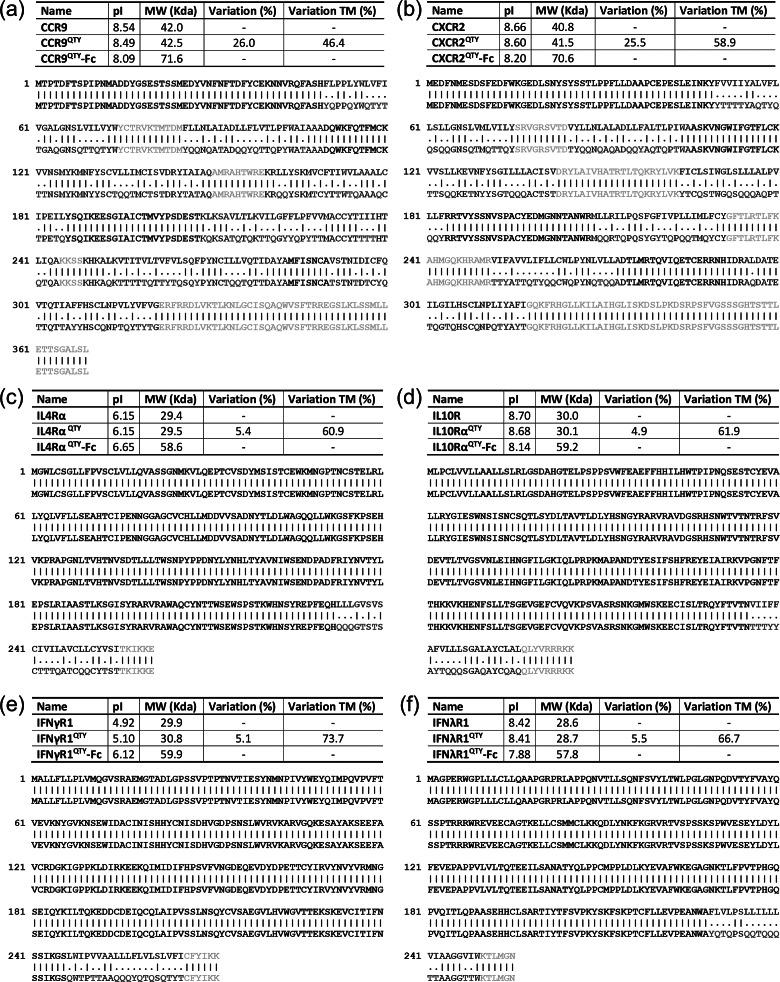
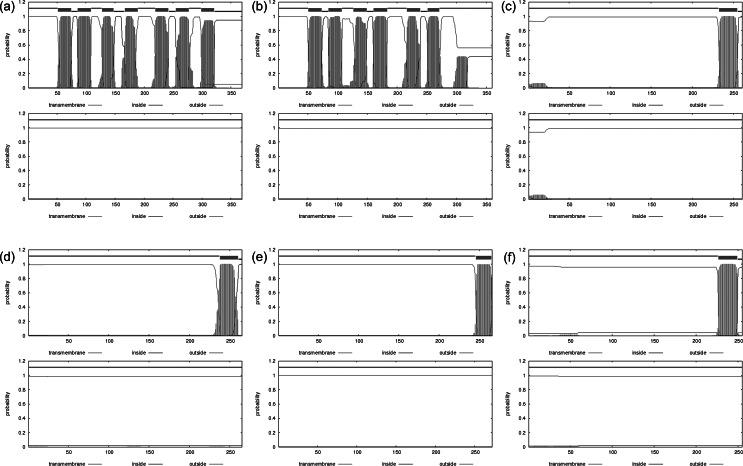
Cytokine release syndrome (CRS), or 'cytokine storm', is the leading side effect during chimeric antigen receptor (CAR)-T therapy that is potentially life-threatening. It also plays a critical role in viral infections such as Coronavirus Disease 2019 (COVID-19). Therefore, efficient removal of excessive cytokines is essential for treatment. We previously reported a novel protein modification tool called the QTY code, through which hydrophobic amino acids Leu, Ile, Val and Phe are replaced by Gln (Q), Thr (T) and Tyr (Y). Thus, the functional detergent-free equivalents of membrane proteins can be designed. Here, we report the application of the QTY code on six variants of cytokine receptors, including interleukin receptors IL4Rα and IL10Rα, chemokine receptors CCR9 and CXCR2, as well as interferon receptors IFNγR1 and IFNλR1. QTY-variant cytokine receptors exhibit physiological properties similar to those of native receptors without the presence of hydrophobic segments. The receptors were fused to the Fc region of immunoglobulin G (IgG) protein to form an antibody-like structure. These QTY code-designed Fc-fusion receptors were expressed in and purified. The resulting water-soluble fusion receptors bind to their respective ligands with values affinity similar to isolated native receptors. Our cytokine receptor-Fc-fusion proteins potentially serve as an antibody-like decoy to dampen the excessive cytokine levels associated with CRS and COVID-19 infection.
细胞因子释放综合征(CRS),即“细胞因子风暴”,是嵌合抗原受体(CAR)-T疗法中潜在危及生命的主要副作用。它在诸如2019冠状病毒病(COVID-19)等病毒感染中也起着关键作用。因此,有效清除过量细胞因子对于治疗至关重要。我们之前报道了一种名为QTY编码的新型蛋白质修饰工具,通过该工具,疏水性氨基酸亮氨酸(Leu)、异亮氨酸(Ile)、缬氨酸(Val)和苯丙氨酸(Phe)被谷氨酰胺(Q)、苏氨酸(T)和酪氨酸(Y)取代。因此,可以设计出无功能洗涤剂的膜蛋白等效物。在此,我们报告了QTY编码在六种细胞因子受体变体上的应用,包括白细胞介素受体IL4Rα和IL10Rα、趋化因子受体CCR9和CXCR2,以及干扰素受体IFNγR1和IFNλR1。QTY变体细胞因子受体表现出与天然受体相似的生理特性,且不存在疏水片段。这些受体与免疫球蛋白G(IgG)蛋白的Fc区域融合,形成类似抗体的结构。这些经QTY编码设计的Fc融合受体在细胞中表达并纯化。所得的水溶性融合受体以与分离的天然受体相似的亲和力结合各自的配体。我们的细胞因子受体-Fc融合蛋白可能作为类似抗体的诱饵,以降低与CRS和COVID-19感染相关的过量细胞因子水平。


 Zotero 插件