
工程细胞外基质促进人类多能干细胞来源的脑类器官形成。
Engineered extracellular matrices facilitate brain organoids from human pluripotent stem cells.
机构信息
Biointerfaces Institute, University of Michigan, Ann Arbor, Michigan, USA.
Macromolecular Science and Engineering Program, University of Michigan, Ann Arbor, Michigan, USA.
出版信息
Ann Clin Transl Neurol. 2023 Jul;10(7):1239-1253. doi: 10.1002/acn3.51820. Epub 2023 Jun 7.
OBJECTIVE
Brain organoids are miniaturized in vitro brain models generated from pluripotent stem cells, which resemble full-sized brain more closely than conventional two-dimensional cell cultures. Although brain organoids mimic the human brain's cell-to-cell network interactions, they generally fail to faithfully recapitulate cell-to-matrix interactions. Here, an engineered framework, called an engineered extracellular matrix (EECM), was developed to provide support and cell-to-matrix interactions to developing brain organoids.
METHODS
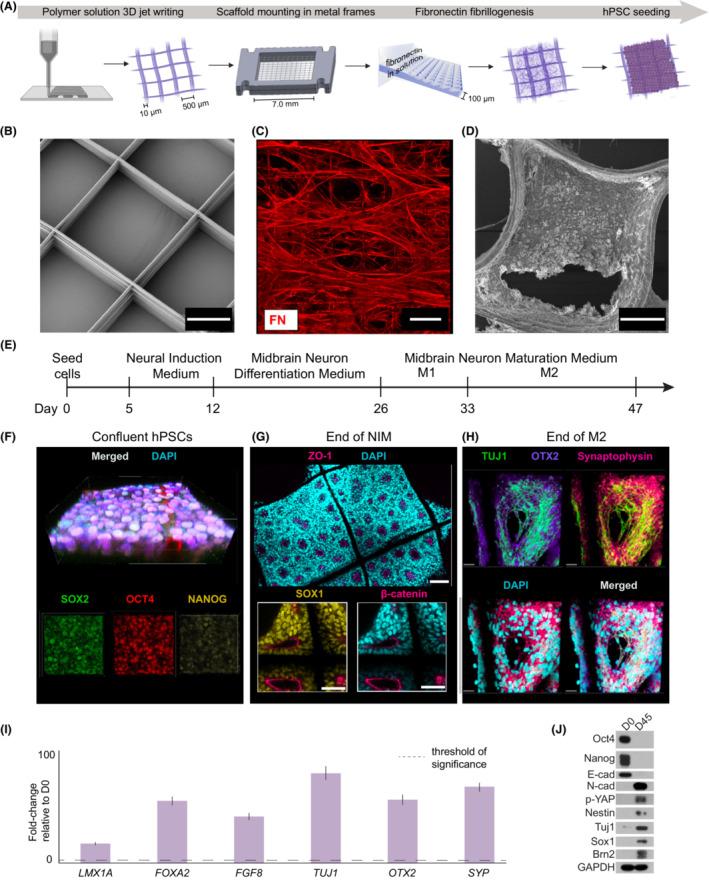
We generated brain organoids using EECMs comprised of human fibrillar fibronectin supported by a highly porous polymer scaffold. The resultant brain organoids were characterized by immunofluorescence microscopy, transcriptomics, and proteomics of the cerebrospinal fluid (CSF) compartment.
RESULTS
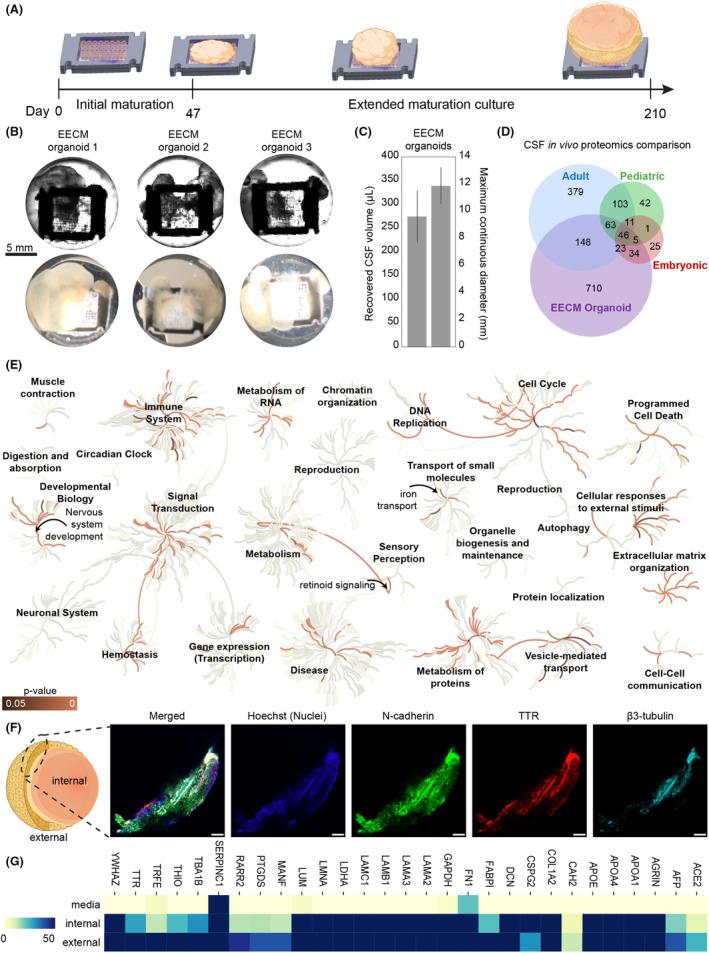
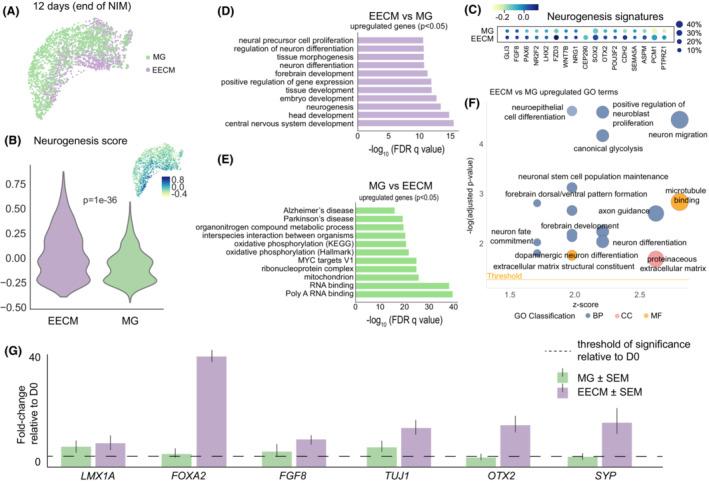
The interstitial matrix-mimicking EECM enhanced neurogenesis, glial maturation, and neuronal diversity from human embryonic stem cells versus conventional protein matrix (Matrigel). Additionally, EECMs supported long-term culture, which promoted large-volume organoids containing over 250 μL of CSF. Proteomics analysis of the CSF found it superseded previous brain organoids in protein diversity, as indicated by 280 proteins spanning 500 gene ontology pathways shared with adult CSF.
INTERPRETATION
Engineered EECM matrices represent a major advancement in neural engineering as they have the potential to significantly enhance the structural, cellular, and functional diversity that can be achieved in advanced brain models.
目的
脑类器官是从小鼠多能干细胞中生成的体外微型脑模型,它们比传统的二维细胞培养更接近全脑。尽管脑类器官模拟了人脑细胞间的网络相互作用,但它们通常无法真实地再现细胞与基质的相互作用。在这里,开发了一种称为工程细胞外基质(EECM)的工程框架,为正在发育的脑类器官提供支持和细胞与基质的相互作用。
方法
我们使用由高度多孔聚合物支架支撑的人纤维状纤维连接蛋白组成的 EECM 生成脑类器官。通过对脑脊液(CSF)腔室的免疫荧光显微镜、转录组学和蛋白质组学进行分析,对生成的脑类器官进行了表征。
结果
与传统的蛋白质基质(Matrigel)相比,基质模拟的 EECM 增强了人类胚胎干细胞的神经发生、神经胶质成熟和神经元多样性。此外,EECM 支持长期培养,从而促进了含有超过 250 μL CSF 的大容量类器官的形成。CSF 的蛋白质组学分析发现,它在蛋白质多样性方面超过了以前的脑类器官,有 280 种蛋白质跨越 500 个与成人 CSF 共享的基因本体途径。
结论
工程 EECM 基质代表了神经工程的重大进展,因为它们有可能显著增强高级脑模型中可实现的结构、细胞和功能多样性。

 Zotero 插件