
癌症中的m5C RNA甲基化:从生物学机制到临床视角
m5C RNA methylation in cancer: from biological mechanism to clinical perspectives.
作者信息
Yuan Fang, Xia Yuxuan, Huang Zhen, Gao Huihui, Bian Yuqi, Zhou Xiangqin
机构信息
Department of Outpatient, Zhejiang Provincial People's Hospital (Affiliated People's Hospital), Hangzhou Medical College, Hangzhou, Zhejiang, China.
Department of Hospital Infection Management and Preventive Medicine, Zhejiang Provincial People's Hospital (Affiliated People's Hospital), Hangzhou Medical College, Hangzhou, Zhejiang, China.
出版信息
Eur J Med Res. 2025 Jun 21;30(1):503. doi: 10.1186/s40001-025-02812-z.
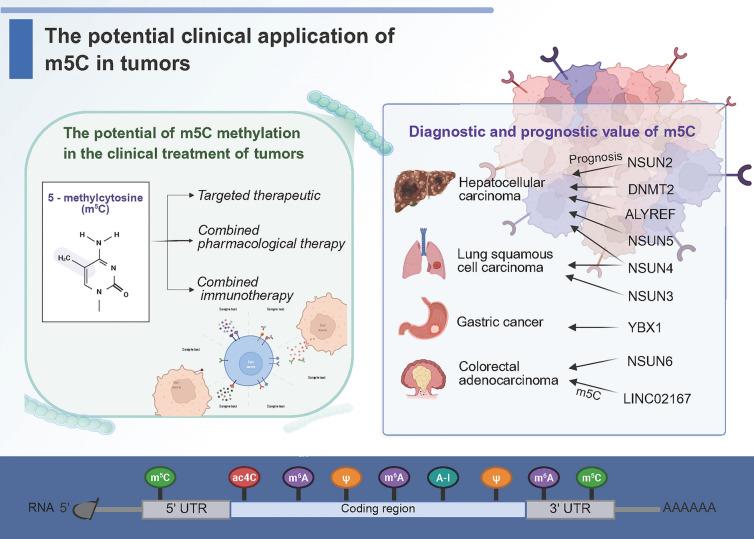
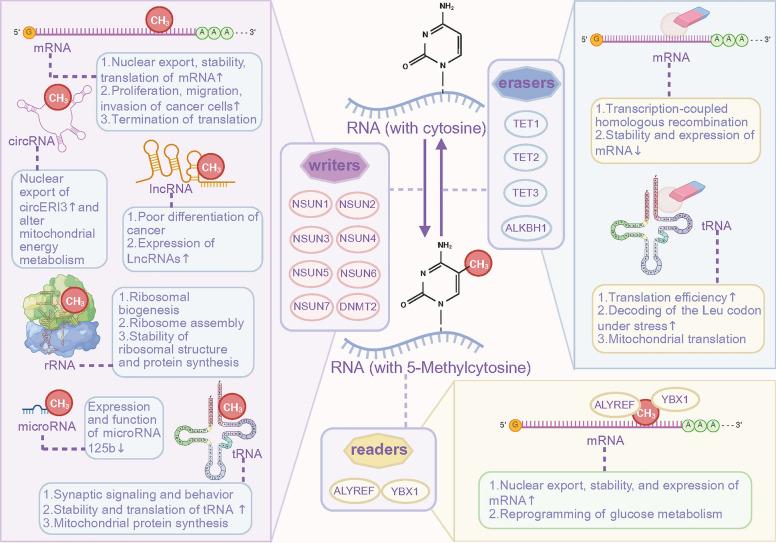
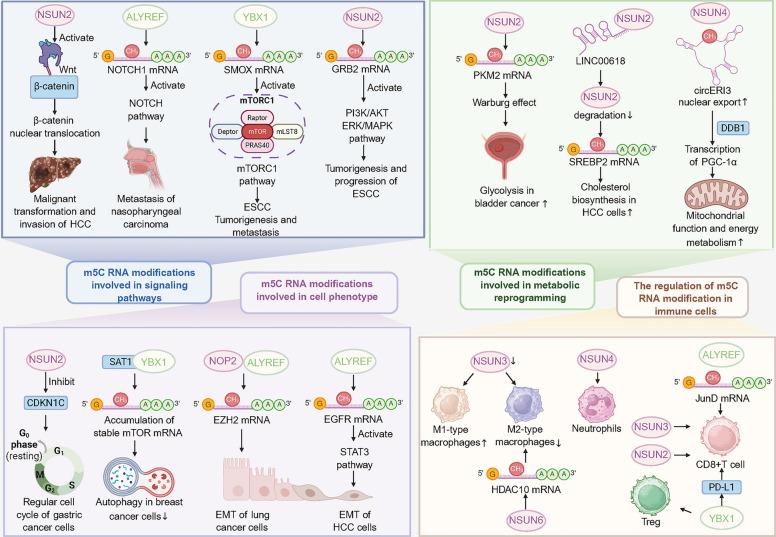
Cancer remains a significant global health threat, characterized by high morbidity and mortality rates. Despite advancements, numerous challenges persist in cancer treatment, underscoring the urgent need for novel therapeutic strategies. As a burgeoning area of cancer research, increasing evidence highlights the critical role of 5-methylcytosine (m5C) methylation in tumorigenesis, progression, and clinical application. In this review, we systematically review the biological mechanism and clinical translational potential of m5C RNA methylation in cancer and analyze in detail the dynamic interactions between m5C regulatory proteins (writer proteins, eraser proteins, and reader proteins). We focus on the role of m5C regulatory proteins in regulating oncogenic signaling pathways, metabolic reprogramming, and immune microenvironment remodeling in different tumor types, while also exploring its clinical potential as a diagnostic marker, prognostic indicator, and target for therapy. This review not only offers a comprehensive analysis of the molecular mechanisms and tumor regulatory networks associated with m5C modification but also focuses on the clinical translational potential of m5C methylation in cancer, aiming to provide novel insights into precision cancer diagnosis and treatment.
癌症仍然是全球重大的健康威胁,其特征是发病率和死亡率居高不下。尽管取得了进展,但癌症治疗中仍存在诸多挑战,这凸显了对新型治疗策略的迫切需求。作为癌症研究的一个新兴领域,越来越多的证据表明5-甲基胞嘧啶(m5C)甲基化在肿瘤发生、发展及临床应用中起着关键作用。在本综述中,我们系统地回顾了m5C RNA甲基化在癌症中的生物学机制和临床转化潜力,并详细分析了m5C调节蛋白(写入蛋白、擦除蛋白和读取蛋白)之间的动态相互作用。我们重点关注m5C调节蛋白在调节不同肿瘤类型中的致癌信号通路、代谢重编程和免疫微环境重塑方面的作用,同时也探索其作为诊断标志物、预后指标和治疗靶点的临床潜力。本综述不仅全面分析了与m5C修饰相关的分子机制和肿瘤调节网络,还聚焦于m5C甲基化在癌症中的临床转化潜力,旨在为精准癌症诊断和治疗提供新的见解。
 Zotero 插件