
肽基脯氨酰异构酶PIN1直接结合并稳定缺氧诱导因子-1α。
Peptidyl Prolyl Isomerase PIN1 Directly Binds to and Stabilizes Hypoxia-Inducible Factor-1α.
作者信息
Han Hyeong-Jun, Kwon Nayoung, Choi Min-A, Jung Kyung Oh, Piao Juan-Yu, Ngo Hoang Kieu Chi, Kim Su-Jung, Kim Do-Hee, Chung June-Key, Cha Young-Nam, Youn Hyewon, Choi Bu Young, Min Sang-Hyun, Surh Young-Joon
机构信息
Tumor Microenvironment Global Core Research Center, College of Pharmacy, Seoul National University, Seoul, 151-742, South Korea.
Research Institute of Pharmaceutical Sciences, College of Pharmacy, Seoul National University, Seoul, 151-742, South Korea.
出版信息
PLoS One. 2016 Jan 19;11(1):e0147038. doi: 10.1371/journal.pone.0147038. eCollection 2016.
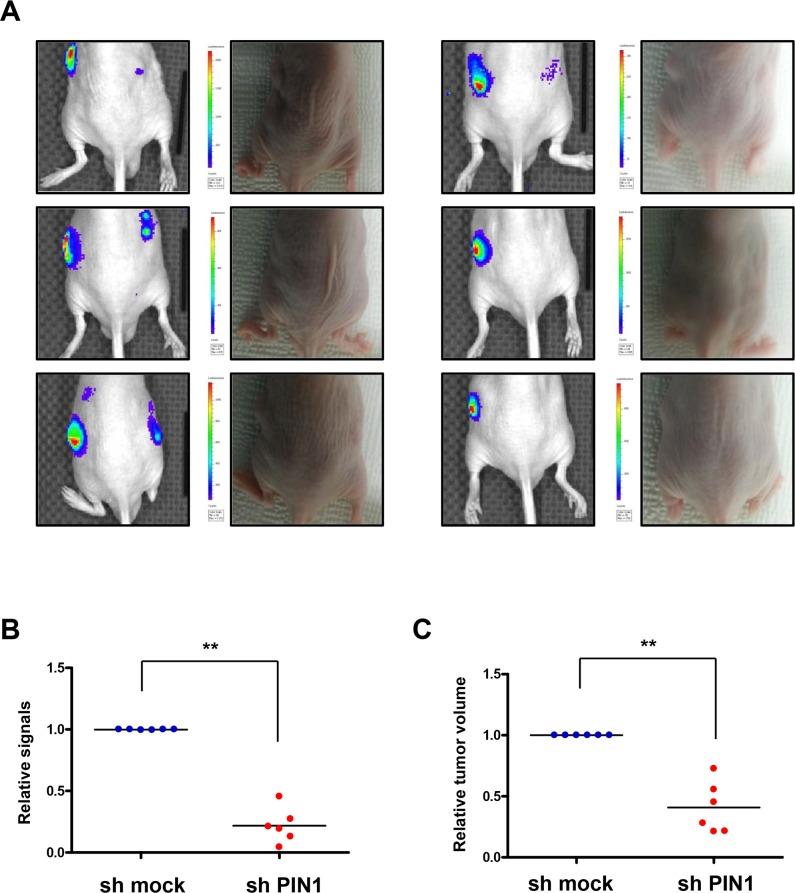
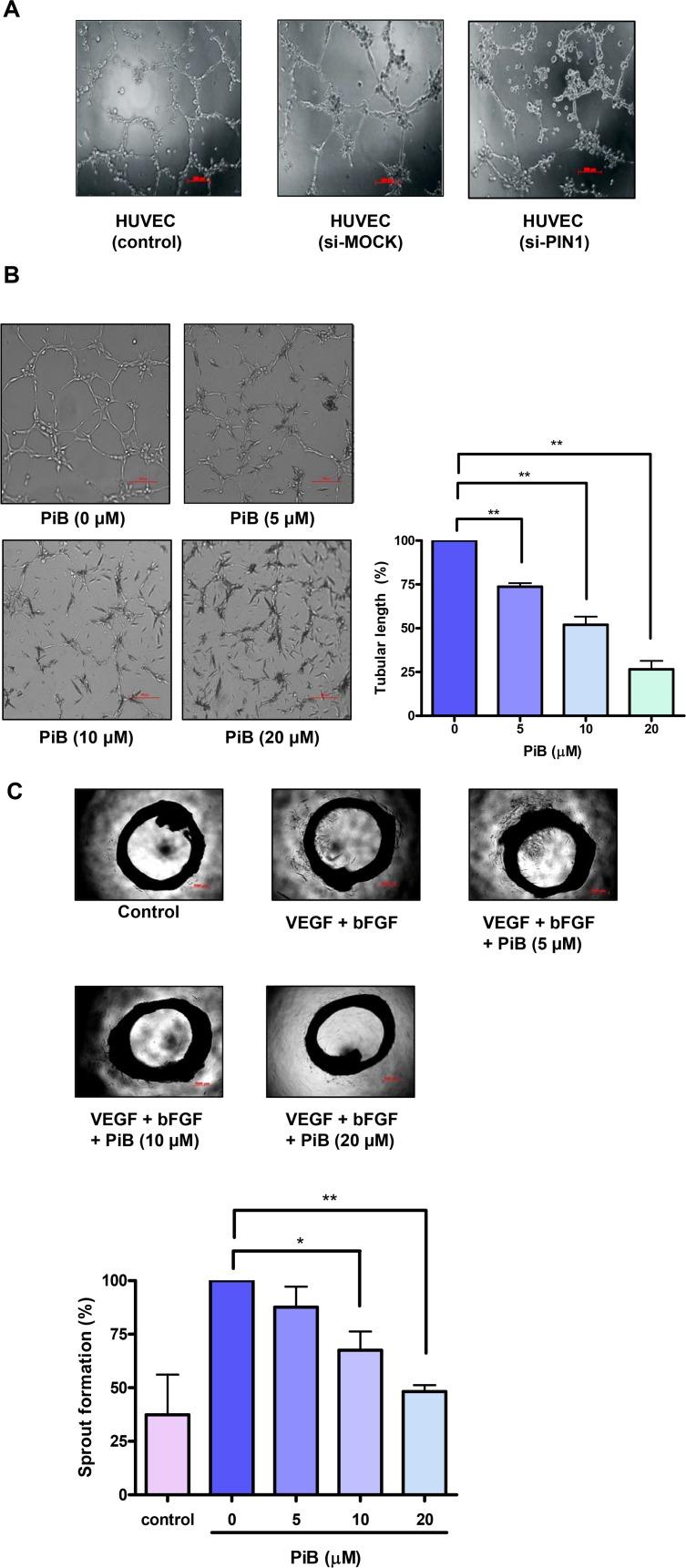
Peptidyl prolyl isomerase (PIN1) regulates the functional activity of a subset of phosphoproteins through binding to phosphorylated Ser/Thr-Pro motifs and subsequently isomerization of the phosphorylated bonds. Interestingly, PIN1 is overexpressed in many types of malignancies including breast, prostate, lung and colon cancers. However, its oncogenic functions have not been fully elucidated. Here, we report that PIN1 directly interacts with hypoxia-inducible factor (HIF)-1α in human colon cancer (HCT116) cells. PIN1 binding to HIF-1α occurred in a phosphorylation-dependent manner. We also found that PIN1 interacted with HIF-1α at both exogenous and endogenous levels. Notably, PIN1 binding stabilized the HIF-1α protein, given that their levels were significantly increased under hypoxic conditions. The stabilization of HIF-1α resulted in increased transcriptional activity, consequently upregulating expression of vascular endothelial growth factor, a major contributor to angiogenesis. Silencing of PIN1 or pharmacologic inhibition of its activity abrogated the angiogenesis. By utilizing a bioluminescence imaging technique, we were able to demonstrate that PIN1 inhibition dramatically reduced the tumor volume in a subcutaneous mouse xenograft model and angiogenesis as well as hypoxia-induced transcriptional activity of HIF-1α. These results suggest that PIN1 interacting with HIF-1α is a potential cancer chemopreventive and therapeutic target.
肽基脯氨酰异构酶(PIN1)通过与磷酸化的丝氨酸/苏氨酸-脯氨酸基序结合,随后使磷酸化键异构化,来调节一部分磷酸化蛋白的功能活性。有趣的是,PIN1在包括乳腺癌、前列腺癌、肺癌和结肠癌在内的多种恶性肿瘤中均过度表达。然而,其致癌功能尚未完全阐明。在此,我们报道PIN1在人结肠癌细胞(HCT116)中直接与缺氧诱导因子(HIF)-1α相互作用。PIN1与HIF-1α的结合以磷酸化依赖的方式发生。我们还发现PIN1在外源性和内源性水平上均与HIF-1α相互作用。值得注意的是,PIN1的结合稳定了HIF-1α蛋白,因为在缺氧条件下它们的水平显著增加。HIF-1α的稳定导致转录活性增加,从而上调血管内皮生长因子的表达,血管内皮生长因子是血管生成的主要促成因素。PIN1的沉默或其活性的药理抑制消除了血管生成。通过利用生物发光成像技术,我们能够证明PIN1抑制在皮下小鼠异种移植模型中显著减小了肿瘤体积,并减少了血管生成以及缺氧诱导的HIF-1α转录活性。这些结果表明,与HIF-1α相互作用的PIN1是一个潜在的癌症化学预防和治疗靶点。




 Zotero 插件