
严重急性呼吸综合征冠状病毒2(SARS-CoV-2)对动物血管紧张素转换酶2受体的广泛及差异性利用
Broad and Differential Animal Angiotensin-Converting Enzyme 2 Receptor Usage by SARS-CoV-2.
作者信息
Zhao Xuesen, Chen Danying, Szabla Robert, Zheng Mei, Li Guoli, Du Pengcheng, Zheng Shuangli, Li Xinglin, Song Chuan, Li Rui, Guo Ju-Tao, Junop Murray, Zeng Hui, Lin Hanxin
机构信息
Institute of Infectious Disease, Beijing Ditan Hospital, Capital Medical University, Beijing, China
Beijing Key Laboratory of Emerging Infectious Disease, Beijing, China.
出版信息
J Virol. 2020 Aug 31;94(18). doi: 10.1128/JVI.00940-20.
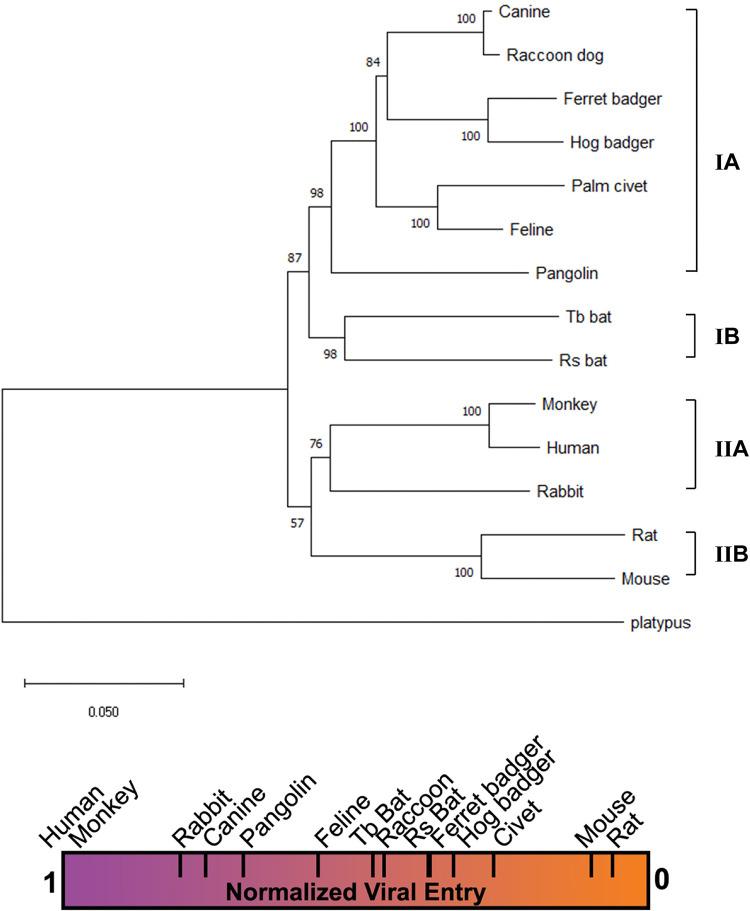
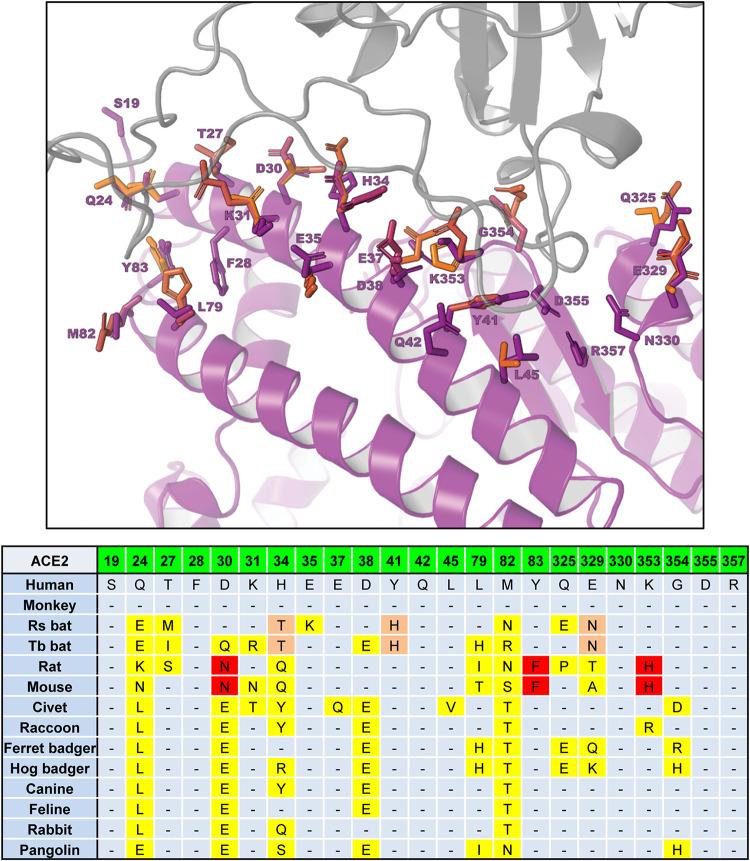
The COVID-19 pandemic has caused an unprecedented global public health and economic crisis. The origin and emergence of its causal agent, SARS-CoV-2, in the human population remains mysterious, although bat and pangolin were proposed to be the natural reservoirs. Strikingly, unlike the SARS-CoV-2-like coronaviruses (CoVs) identified in bats and pangolins, SARS-CoV-2 harbors a polybasic furin cleavage site in its spike (S) glycoprotein. SARS-CoV-2 uses human angiotensin-converting enzyme 2 (ACE2) as its receptor to infect cells. Receptor recognition by the S protein is the major determinant of host range, tissue tropism, and pathogenesis of coronaviruses. In an effort to search for the potential intermediate or amplifying animal hosts of SARS-CoV-2, we examined receptor activity of ACE2 from 14 mammal species and found that ACE2s from multiple species can support the infectious entry of lentiviral particles pseudotyped with the wild-type or furin cleavage site-deficient S protein of SARS-CoV-2. ACE2 of human/rhesus monkey and rat/mouse exhibited the highest and lowest receptor activities, respectively. Among the remaining species, ACE2s from rabbit and pangolin strongly bound to the S1 subunit of SARS-CoV-2 S protein and efficiently supported the pseudotyped virus infection. These findings have important implications for understanding potential natural reservoirs, zoonotic transmission, human-to-animal transmission, and use of animal models. SARS-CoV-2 uses human ACE2 as a primary receptor for host cell entry. Viral entry mediated by the interaction of ACE2 with spike protein largely determines host range and is the major constraint to interspecies transmission. We examined the receptor activity of 14 ACE2 orthologs and found that wild-type and mutant SARS-CoV-2 lacking the furin cleavage site in S protein could utilize ACE2 from a broad range of animal species to enter host cells. These results have important implications in the natural hosts, interspecies transmission, animal models, and molecular basis of receptor binding for SARS-CoV-2.
新冠疫情引发了一场前所未有的全球公共卫生和经济危机。其病原体严重急性呼吸综合征冠状病毒2(SARS-CoV-2)在人群中的起源和出现仍然成谜,尽管有人提出蝙蝠和穿山甲是其天然宿主。引人注目的是,与在蝙蝠和穿山甲中发现的类似SARS-CoV-2的冠状病毒不同,SARS-CoV-2在其刺突(S)糖蛋白中含有一个多碱性弗林蛋白酶切割位点。SARS-CoV-2利用人类血管紧张素转换酶2(ACE2)作为其受体来感染细胞。S蛋白对受体的识别是冠状病毒宿主范围、组织嗜性和发病机制的主要决定因素。为了寻找SARS-CoV-2的潜在中间宿主或扩增动物宿主,我们检测了14种哺乳动物物种的ACE2受体活性,发现多个物种的ACE2能够支持以野生型或缺乏弗林蛋白酶切割位点的SARS-CoV-2 S蛋白假型化的慢病毒颗粒的感染性进入。人类/恒河猴和大鼠/小鼠的ACE2分别表现出最高和最低的受体活性。在其余物种中,来自兔子和穿山甲的ACE2与SARS-CoV-2 S蛋白的S1亚基强烈结合,并有效支持假型病毒感染。这些发现对于理解潜在的天然宿主、人畜共患病传播、人传动物以及动物模型的使用具有重要意义。SARS-CoV-2利用人类ACE2作为宿主细胞进入的主要受体。由ACE2与刺突蛋白相互作用介导的病毒进入在很大程度上决定了宿主范围,并且是种间传播的主要限制因素。我们检测了14种ACE2直系同源物的受体活性,发现S蛋白中缺乏弗林蛋白酶切割位点的野生型和突变型SARS-CoV-2能够利用多种动物物种的ACE2进入宿主细胞。这些结果对于SARS-CoV-2的天然宿主、种间传播、动物模型以及受体结合的分子基础具有重要意义。


 Zotero 插件