
2019冠状病毒病感染风险中的社会经济不平等——来自德国监测数据分析的初步结果
Socioeconomic inequalities in the risk of SARS-CoV-2 infection - First results from an analysis of surveillance data from Germany.
作者信息
Wachtler Benjamin, Michalski Niels, Nowossadeck Enno, Diercke Michaela, Wahrendorf Morten, Santos-Hövener Claudia, Lampert Thomas, Hoebel Jens
机构信息
Robert Koch Institute, Berlin Department of Epidemiology and Health Monitoring.
Robert Koch Institute, Berlin Department of Infectious Disease Epidemiology.
出版信息
J Health Monit. 2020 Oct 9;5(Suppl 7):18-29. doi: 10.25646/7057.
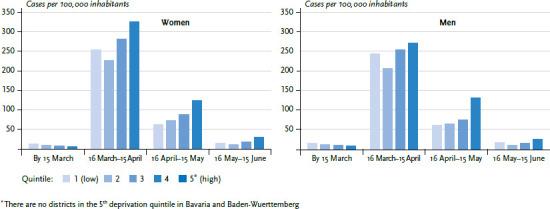
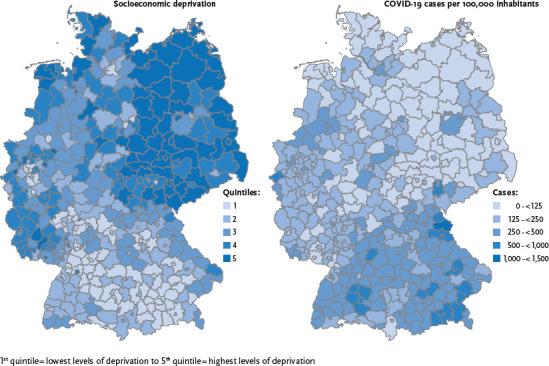
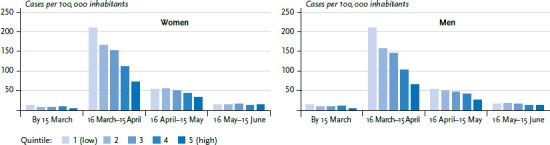
Experiences with acute respiratory diseases which caused virus epidemics in the past and initial findings in the research literature on the current COVID-19 pandemic suggest a higher SARS-CoV-2 infection risk for socioeconomically disadvantaged populations. Nevertheless, further research on such a potential association between socioeconomic status and SARS-CoV-2 incidence in Germany is required. This article reports on the results of a first Germany-wide analysis of COVID-19 surveillance data to which an area-level index of socioeconomic deprivation was linked. The analysis included 186,839 laboratory-confirmed COVID-19 cases, the data of which was transferred to the Robert Koch Institute by 16 June 2020, 00:00. During the early stage of the epidemic up to mid-April, the data show a socioeconomic gradient with higher incidence in less deprived regions of Germany. Over the course of the epidemic, however, this gradient becomes less measurable and finally reverses in south Germany, the region hardest hit by the epidemic, to the greater detriment of the more deprived regions. These results highlight the need to continue monitoring social epidemiological patterns in COVID-19 and analysing the underlying causes to detect dynamics and trends early on and countering a potential exacerbation of health inequalities.
过去引发病毒流行的急性呼吸道疾病的相关经历以及当前关于新冠疫情的研究文献中的初步发现表明,社会经济地位不利的人群感染新冠病毒的风险更高。然而,德国仍需进一步研究社会经济地位与新冠病毒发病率之间的这种潜在关联。本文报告了首次对德国全国范围内的新冠疫情监测数据进行分析的结果,该分析将社会经济剥夺的区域层面指数与之关联。该分析涵盖了186,839例实验室确诊的新冠病例,这些病例的数据于2020年6月16日00:00传输至罗伯特·科赫研究所。在疫情早期直至4月中旬,数据显示出一种社会经济梯度,德国贫困程度较低的地区发病率较高。然而,在疫情发展过程中,这种梯度变得不太明显,最终在疫情最严重的德国南部地区发生逆转,对贫困程度较高的地区造成了更大的不利影响。这些结果凸显了持续监测新冠疫情中的社会流行病学模式并分析其潜在原因的必要性,以便尽早发现动态变化和趋势,并应对健康不平等现象可能加剧的情况。
 Zotero 插件